
Bathroom Ventilation and Mold in the Foggy Bay Area: Fans, Code and Sizing
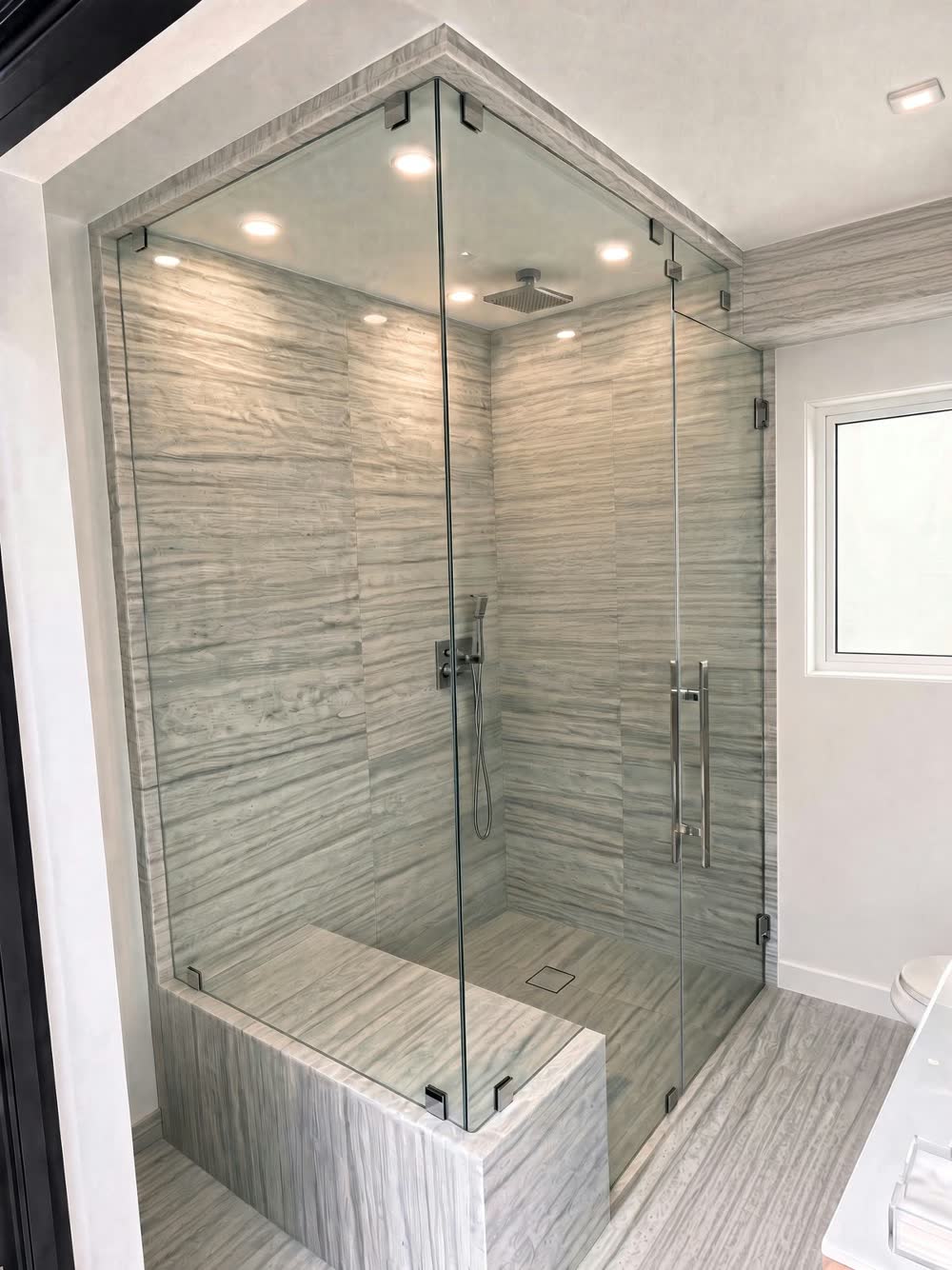
Why do Bay Area bathrooms get moldy?
Mold needs moisture, and a daily shower delivers plenty of it. If that moisture can't leave the room quickly, it soaks into grout, drywall and the ceiling paint. The EPA's advice is to keep indoor humidity below 60%, ideally between 30% and 50%, and to dry wet areas within 24 to 48 hours.
In the fog belt that's harder than it sounds. Along the coast, in Daly City, South San Francisco and Pacifica, summer often means cool, damp marine air rolling in off the Pacific. Opening the bathroom window lets in Karl the Fog, who frankly does not need help from your shower. A properly sized fan that vents outdoors does the job a window can't.
What does California code require for bathroom fans?
Several state codes work together:
| Code | What it says |
|---|---|
| California Residential Code (2025) | Each bathroom with a tub or shower must be mechanically ventilated for humidity control. Opening a window doesn't count. |
| California Energy Code (Title 24, Part 6) | Bathroom exhaust of at least 50 cfm for an on-demand fan, or 20 cfm if it runs continuously |
| ASHRAE 62.2 language used in Title 24 forms | On-demand bath fans rated 3 sones or quieter; continuous fans 1 sone or quieter |
| CALGreen 4.506.1 (2025) | Fans must be ENERGY STAR, ducted to terminate outside the building, and (unless part of a whole-house system) controlled by a humidity control adjustable from 50% or lower up to 80% |
The 2025 codes took effect January 1, 2026.
Do these rules apply to a bathroom remodel?
Partly, and it depends on your scope. CALGreen's residential mandatory measures apply to additions and alterations that increase a home's conditioned area, volume or size, and then only within that area. A remodel that stays inside the same walls may not trigger the humidity-control rule on its own. Building departments interpret this differently, so check with your city when you pull the permit.
Our advice is simpler: if the ceiling is open anyway, install an ENERGY STAR fan with a humidity sensor and duct it outside. It's a modest add while the ceiling is open, and much easier than repainting a mildewed ceiling every other year. Our bathroom remodel planning guide covers how this fits into the rest of the project.
What size bathroom fan do you need?
The Home Ventilating Institute (HVI) offers a simple rule:
- Bathrooms up to 100 square feet: 1 cfm per square foot. A 5-by-8-foot bath (40 sq ft) needs at least a 40 cfm fan, which means the 50 cfm code minimum applies.
- Bathrooms over 100 square feet: add up the fixtures. 50 cfm each for a toilet, shower or standard tub, and 100 cfm for a jetted tub.
HVI also recommends running the fan for about 20 minutes after a shower, and undercutting the door so fresh air can get in. A humidity-sensing fan takes care of the timing for you, which is handy for teenagers who consider the fan switch optional.
Where should a bathroom exhaust fan vent?
Outside. CALGreen requires bath fans to be ducted to terminate outside the building, so venting into the attic or a crawlspace doesn't qualify. Title 24 also sets minimum duct diameters by fan rating, and flex duct must be fully stretched out with gentle bends. A long, crushed or undersized duct can leave a fan moving less air than its label promises.
If your bathroom has no outside wall, as in some interior baths in Daly City and South San Francisco homes, plan the duct route early. Common paths go up through the roof or out a side wall. Keep the termination away from walkways, since code doesn't allow exhaust to be directed onto them.
What else helps prevent bathroom mold in the fog belt?
- Choose a quiet fan. People actually run fans that don't sound like a leaf blower.
- Put the fan near the shower, away from where makeup air enters, so moist air leaves first.
- Use waterproofing behind tile, not just on top of it. See our tub-to-shower conversion guide for shower details.
- Squeegee glass and tile after showers, and keep a cheap hygrometer in the bathroom.
- Clean small mold spots promptly. The EPA says most people can handle areas under about 10 square feet themselves; larger areas or water damage call for a professional.
Remodeling in Daly City? Our Daly City remodel guide covers local permits, and our South San Francisco guide covers ventilation tips for fog and wind.
Working with ProRock in the Bay Area
ProRock Remodeling is a licensed general contractor (California CSLB #1154078) with more than 20 years in business, $1M in general liability insurance and a 2-year workmanship warranty. We focus on kitchen and bathroom remodels, and also handle whole-home remodels, ADUs, design and permits for homeowners from San Jose to South San Francisco. You can see finished showers and baths in our project gallery. Call (408) 991-4744 or request a free estimate.
Frequently asked questions
Is a bathroom exhaust fan required in California?
Yes, for bathrooms with a tub or shower. The 2025 California Residential Code requires mechanical ventilation for humidity control, and opening a window doesn't count.
What size bathroom fan do I need?
HVI recommends 1 cfm per square foot for bathrooms up to 100 square feet. For larger bathrooms, add 50 cfm per toilet, shower or tub and 100 cfm per jetted tub. California's minimum for an on-demand bath fan is 50 cfm.
Does my bathroom fan need a humidity sensor?
CALGreen 4.506.1 requires a humidity control adjustable from 50% or lower to 80% unless the fan is part of a whole-house ventilation system. For remodels, it applies to work that adds area, volume or size, so check with your city; it's a good idea in the fog belt either way.
Can a bathroom fan vent into the attic?
No. CALGreen requires bathroom fans to be ducted to terminate outside the building. Venting into an attic or crawlspace just moves the moisture problem.
How long should I run my bathroom fan after a shower?
HVI recommends about 20 minutes after using the bathroom. A humidity-sensing fan can handle this automatically.
Planning a remodel in the Bay Area?
ProRock Remodeling is a licensed general contractor (CSLB #1154078) working from San Jose to South San Francisco, with $1M liability coverage and a 2-year workmanship warranty. Call (408) 991-4744 or request a free estimate.
Sources
- 2025 CALGreen 4.506.1 Bathroom exhaust fans (GoCodebook)
- ICC: Guide to the 2025 CALGreen Residential (sample, Section 301.1.1)
- 2025 California Residential Code: bathroom glazing and exhaust (GoCodebook)
- California Energy Commission: CF2R-MCH-32-H Local Mechanical Exhaust (2025)
- California Energy Commission: MCH-27-H Indoor Air Quality and Mechanical Ventilation (2025)
- HVI: Bathroom Ventilation
- EPA: A Brief Guide to Mold, Moisture and Your Home