
Kitchen Cabinets in the Bay Area: Stock vs Semi-Custom vs Custom, Materials and Rules
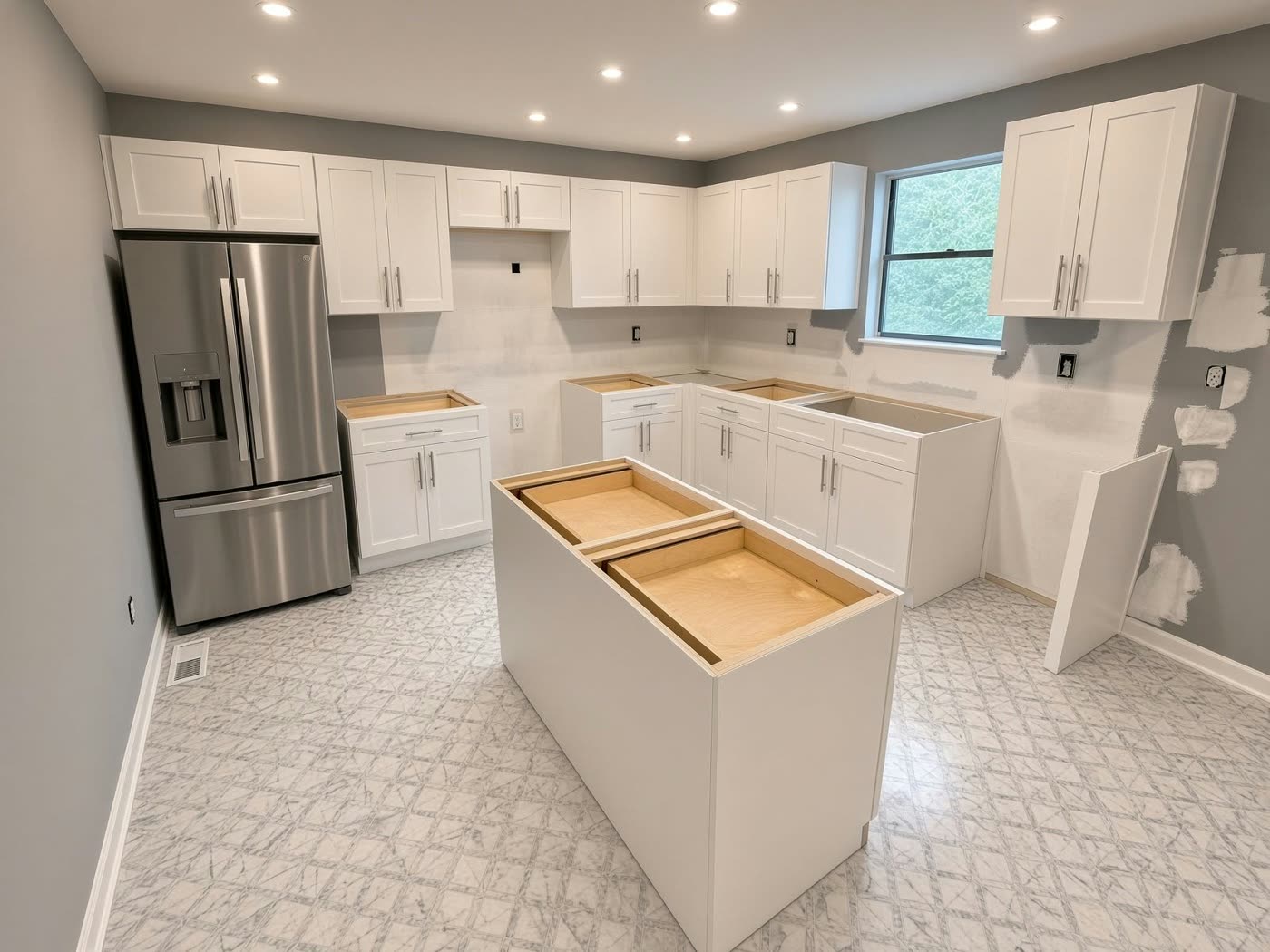
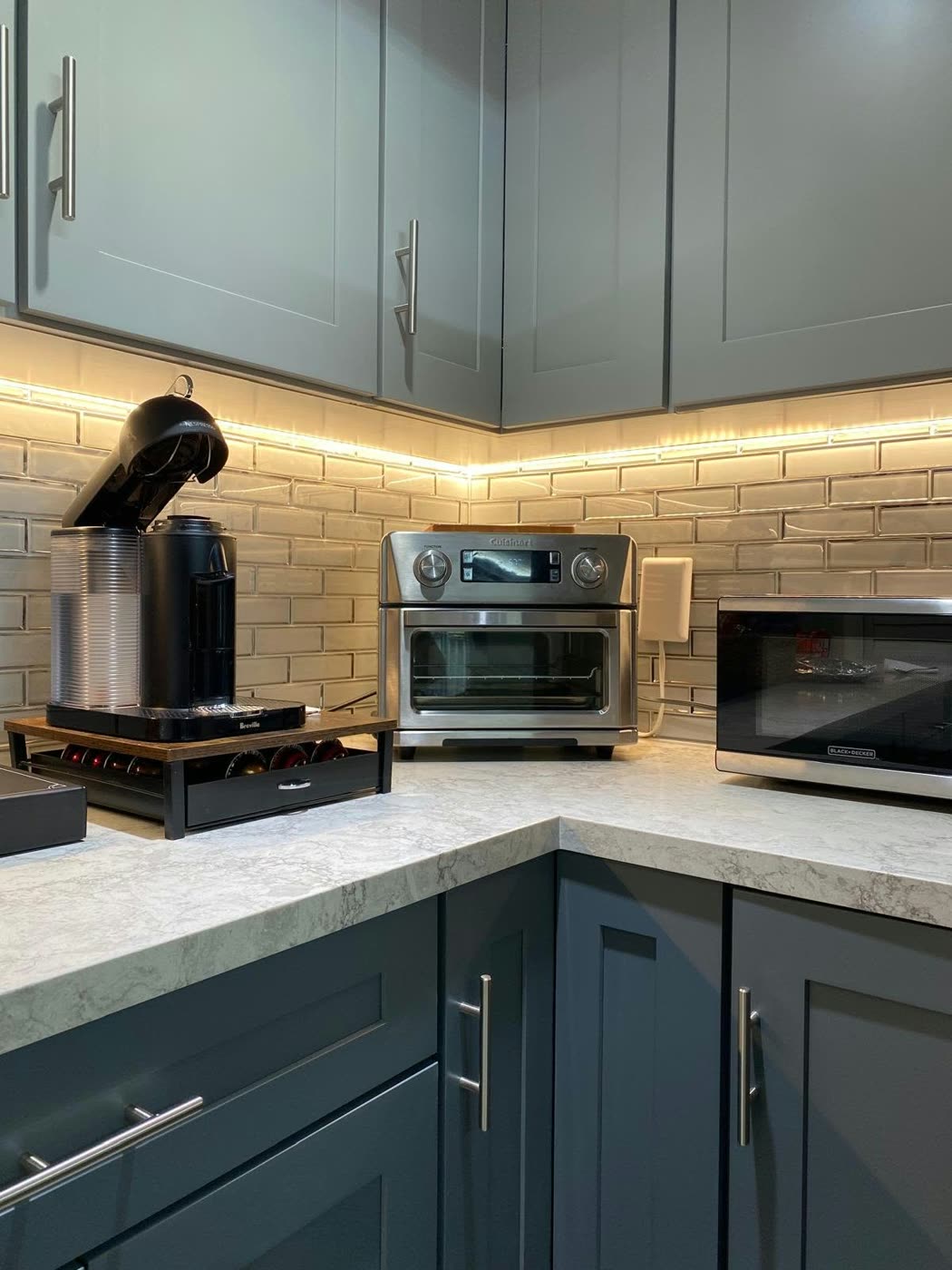
What's the difference between stock, semi-custom and custom cabinets?
Cabinets usually take the biggest bite of a kitchen budget, so it helps to know the three tiers before you start shopping.
- Stock cabinets are built in set sizes, styles and finishes. Standard boxes typically come in 3-inch width steps, often from 9 to 45 inches, and fillers close the gaps. They tend to be the most affordable and the most limited.
- Semi-custom cabinets are, in the Kitchen Cabinet Manufacturers Association's (KCMA) words as quoted by Fine Homebuilding, "built to order but within a defined set of construction parameters." You get more sizes, finishes and accessories without starting from scratch.
- Custom cabinets are made to fit your room, in nearly any size, style or material.
In the Bay Area the right tier often depends on the house. A 1950s tract kitchen in Santa Clara with square walls may fit stock boxes nicely. A Noe Valley Victorian with a sloping floor and an odd chimney chase may be happier with semi-custom or custom.
Frameless or face-frame: which is better?
Neither is better everywhere. KCMA explains the difference this way:
| Face-frame (framed) | Frameless (European) | |
|---|---|---|
| How it's built | Solid wood frame on the front; doors hang on the frame | No front frame; strength comes from thicker box sides, floor and back |
| Door styles | Partial overlay, full overlay or inset | Full overlay only |
| Storage | Frame reduces drawer height; usually a center stile above about 24 in. wide | About 20% more storage; up to 36 in. wide without a center partition |
| Installation | More forgiving; fillers and stiles hide uneven walls | Needs precise install; tight reveals show every wave |
| Look | Traditional or transitional | Modern and minimal |
That installation point matters here. Century-old walls in San Francisco and Oakland are rarely flat. Frameless can still work, but budget time for shimming and scribing. If you own an Eichler, frameless often suits the clean lines; our Eichler remodel guide has more on that style.
Plywood or particleboard boxes?
Both are common, and both can make a good cabinet. The main difference is how they handle water. According to cabinet maker Decor Cabinets, particleboard can swell when it gets wet, and that swelling is permanent. Plywood can swell too, but it has a better chance of returning close to normal once it dries, and it is lighter. That's why many people choose plywood for the sink base and dishwasher area even if the rest of the kitchen is particleboard.
What are California's formaldehyde rules for cabinets?
California led the nation here. The California Air Resources Board's (CARB) Airborne Toxic Control Measure for composite wood, approved in 2007, limits formaldehyde from hardwood plywood, particleboard and MDF, and it covers finished goods such as cabinets sold in California. The federal TSCA Title VI rule now uses limits identical to CARB Phase II:
- Hardwood plywood: 0.05 ppm
- Particleboard: 0.09 ppm
- MDF: 0.11 ppm
- Thin MDF: 0.13 ppm
Cabinets made after March 22, 2019 with these panels should carry a label with the fabricator's name, the production month and year, and a TSCA Title VI compliance statement. If you can't find it, ask your supplier to show you the label or the compliance paperwork before you buy.
What does KCMA certification tell you?
KCMA's A161.1 certification puts cabinets through 14 tests. Wall cabinets carry a 600-pound load, doors and drawers cycle 25,000 times, and finishes face heat and humidity (120°F at 70% humidity for 24 hours) plus spills like vinegar, coffee and alcohol. Certified cabinets come in every price range, and KCMA's "Who made my cabinets?" tool helps you check a brand. It's a useful tie-breaker when two quotes look alike.
How long do cabinets take to arrive?
It varies by line and options. Fine Homebuilding reported one stock line shipping in as little as 5 to 10 days and semi-custom lines in as little as four weeks, with upgrades pushing six weeks or more. Custom work is usually longest. Ask for a written lead time, and order before demolition so your kitchen isn't empty while you wait. Highway 101 traffic will slow the delivery truck enough already. See our kitchen remodel timeline for how cabinets fit the schedule.
What affects cabinet cost?
- Tier: stock, semi-custom or custom
- Box material and construction: plywood vs particleboard, framed vs frameless
- Door style and finish, including inset doors and painted finishes
- Number of boxes and linear feet, plus fillers and panels
- Accessories like pull-outs, drawer organizers and soft-close hardware
- Installation difficulty, such as out-of-level floors or stairs to carry boxes up
For full-project budgeting, see our kitchen remodel cost guide, and for tight spaces, our small kitchen layout guide.
Working with ProRock in the Bay Area
ProRock Remodeling is a licensed general contractor (California CSLB #1154078) with more than 20 years in business, $1M in general liability insurance and a 2-year workmanship warranty. We focus on kitchen and bathroom remodels, and also handle whole-home remodels, ADUs, design and permits for homeowners from San Jose to San Francisco. Call (408) 991-4744 or request a free estimate.
Frequently asked questions
Are semi-custom cabinets worth it?
Often, yes. Semi-custom cabinets are built to order within a defined set of options, giving more sizes and finishes than stock without the cost and wait of fully custom work. They're a common middle ground for Bay Area kitchens with slightly irregular rooms.
Are frameless cabinets better than face-frame cabinets?
Frameless cabinets give about 20% more storage and full access, according to KCMA, but they need a precise installation. Face-frame cabinets offer inset and partial-overlay doors and are more forgiving on uneven walls.
Is particleboard bad for kitchen cabinets?
Not necessarily. Particleboard is widely used, but it swells permanently if it gets wet. Many homeowners choose plywood for sink bases and other wet areas.
How do I know my cabinets meet California formaldehyde rules?
Cabinets made with hardwood plywood, particleboard or MDF should carry a label with the fabricator's name, production date and a TSCA Title VI compliance statement. The limits are identical to CARB Phase II, for example 0.09 ppm for particleboard.
How long does it take to get kitchen cabinets?
It depends on the line. Fine Homebuilding cited stock cabinets shipping in as little as 5 to 10 days and semi-custom lines in about four weeks, with upgrades taking six weeks or more. Custom cabinets usually take longest, so get a written lead time.
Planning a remodel in the Bay Area?
ProRock Remodeling is a licensed general contractor (CSLB #1154078) working from San Jose to San Francisco, with $1M liability coverage and a 2-year workmanship warranty. Call (408) 991-4744 or request a free estimate.
Sources
- KCMA: The Differences Between Framed and Frameless Cabinets
- KCMA: About KCMA Quality Certification
- EPA: Frequent Questions for Consumers about the Formaldehyde Standards for Composite Wood Products Act
- CARB: Composite Wood Products Program
- Fine Homebuilding: Get to Know Semicustom Kitchen Cabinets
- Decor Cabinets: Particle Core vs Plywood Core Cabinet Box Material